
Two to six weeks covers mild tendon irritation when the load gets managed right from the start. A partial tear sits in a different category, more like two to six months depending on severity and how the rehab goes. Full ruptures, whether surgery is involved or not, tend to run nine to twelve months or …

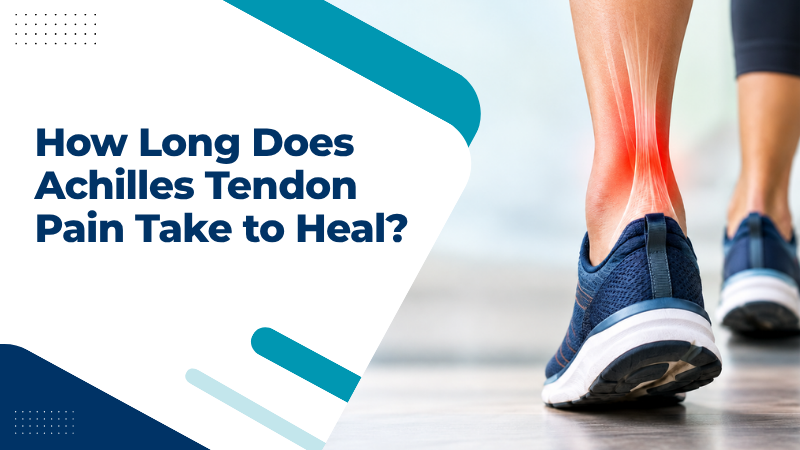
Two to six weeks covers mild tendon irritation when the load gets managed right from the start. A partial tear sits in a different category, more like two to six months depending on severity and how the rehab goes. Full ruptures, whether surgery is involved or not, tend to run nine to twelve months or beyond. The window doesn’t shrink much with surgery itself. What actually changes the timeline is how quickly the right loading starts and whether the thing that stressed the tendon in the first place gets corrected.
Most people who end up with chronic achilles tendon pain were doing the right thing initially, just not enough of it.
According to the physiotherapy team at Back to Ease in Bayswater, “The Achilles tendon responds to load, not just rest. Resting it completely for weeks often delays recovery rather than speeding it up. Tendons need progressive loading to remodel and strengthen, and that process has to be introduced at the right rate for that individual.”
What Affects How Long Achilles Tendon Pain Lasts?
The right starting point is where you are on the injury spectrum, not how long you’ve been in pain.

- Injury type and stage: Achilles tendinopathy isn’t a single thing. It runs from early reactive irritation through a messier middle phase called dysrepair, and into degenerative tendinopathy where the tendon tissue has changed structurally. These aren’t just labels. Each one needs a different approach. Early reactive cases can calm down pretty quickly if the load drops at the right time. The degenerative end of the spectrum is slower and needs a rebuilding program measured in months.
- Load history: Tendons that have been overloaded repeatedly, or underloaded for extended periods, take longer to respond to treatment. Training load spikes are one of the most common ways Achilles tendinopathy starts. The tendon doesn’t adapt fast enough, the load keeps going in, and recovery between sessions never quite happens.
- How early rehab starts: Getting the diagnosis and the loading program right inside the first few weeks makes a genuine difference to how long recovery takes. Cases that relied on on passive treatment or complete rest for months before any proper rehab tend to drag. Tendons don’t get better from sitting still. They need load, introduced at the right rate.
- Whether it’s insertional or mid-portion: The insertion point (where the tendon meets the heel bone) and mid-portion (the classic spot several centimetres above the heel) respond differently to the same exercises. Insertional tendinopathy doesn’t tolerate the traditional drop-heel eccentric program well. The approach has to be matched to the location, which is part of why self-directed rehab often stalls.
A physiotherapist can assess the injury grade and load tolerance before starting a loading program, making tendon injury treatment more reliable than following a generic protocol.
How Does Physiotherapy for Achilles Tendinopathy Work?
Rest alone doesn’t fix the tendon. What the tissue needs is progressive load, introduced carefully and built over time.
- Isometric loading in the early stage: Sustained calf contractions against resistance without movement. These calm tendon pain quickly and can be done even when the tendon is still quite irritable. A useful bridge between complete rest and proper loading.
- Eccentric and heavy slow resistance training: Research from a 2024 PMC systematic review and meta-analysis found eccentric exercise cut pain and improved structural outcomes in mid-portion Achilles tendinopathy. Heavy slow resistance training gets to the same place through a slightly different route and is often easier to stick with. The reason both work is the same: load applied at the right intensity tells the tendon to remodel.
- Soft tissue work and manual therapy: A 2023 PubMed network meta-analysis found combining eccentric loading with soft tissue therapy produced the strongest short-term pain outcomes for insertional Achilles tendinopathy of any single-modality approach. Hands-on work around the calf, plantar fascia and tendon sheath gets the tissue moving better and reduces the guarding that limits how the tendon loads.
- Gait and biomechanical correction: How load reaches the Achilles tendon during walking and running is shaped by foot mechanics, hip control, and cadence. Correcting what’s putting excess stress on the tendon during activity is often the part that prevents recurrence. Without addressing this, many people clear the pain only to flare it again when they return to sport.
Managing Achilles tendon pain shares some of the same principles as other lower limb injury rehab. For a comparison of how that process differs between different tissue types at the ankle, the ankle recovery blog covers the staged approach for ankle sprains in detail.
What Are the Warning Signs That Achilles Pain Is Getting Worse?
Not all Achilles tendon pain is at the same stage. A few patterns sit outside the typical tendinopathy picture and warrant a different kind of attention.

Tendinopathy is often slow to change, but it’s not usually an emergency. There are a handful of presentations though where the clinical picture shifts and so does what needs to happen.
- Sudden sharp pain with a pop: The pop happens mid-activity, the heel suddenly feels like something struck it from behind, and walking becomes noticeably weak. That’s a rupture until proven otherwise. Not a tendinopathy flare. Imaging and a prompt clinical assessment are the next step.
- Pain that worsens with progressive loading: Tendinopathy usually improves gradually with a well-managed loading program. When pain climbs consistently from session to session and doesn’t settle in between, the program is asking more of the tendon than it can currently handle. Pushing through doesn’t resolve this. Reassessing the load does.
- Ongoing pain at rest or overnight: Tendinopathy pain is typically activity-related. When it hangs around at rest, shows up overnight or is there first thing every morning for weeks without improvement, the tendon is either very irritable or the diagnosis needs revisiting.
- Gradual tendon thickening with worsening symptoms: Some degree of tendon thickening is common in tendinopathy and isn’t always a problem. But thickening that keeps progressing alongside declining function and increasing pain usually means the tendon has shifted into dysrepair or degenerative territory. Passive treatment and light walking won’t shift that. Proper progressive loading is what’s needed, and the dose has to match what the tendon can actually tolerate.
For context on how tissue type shapes recovery differently across lower limb injuries, the sprain vs strain blog covers the structural differences and what each means for recovery expectations.
Key Takeaways: Achilles tendon pain doesn’t have a single timeline. Mild tendinopathy caught early and managed well can be over in weeks. Chronic or structural injuries are months of consistent work. What they have in common is that rest alone doesn’t fix them. The tendon needs load, the right type at the right rate, to change. Sudden severe symptoms with a pop or loss of push-off need a proper assessment, not a wait-and-see approach.
Frequently Asked Questions
Is walking okay when my Achilles tendon is sore?
Light walking is usually fine. Stick to flat ground and cut the pace back.
Should I massage a painful Achilles tendon?
Around it, yes. Directly on the tendon itself, not while it’s irritated.
Can Achilles tendonitis heal without treatment?
Sometimes, but loading it wrong while waiting tends to make things worse.
What are the signs an Achilles tendon might rupture?
A sudden pop, sharp heel pain, and the foot not pushing off properly.
References :
Disclaimer :
This blog is for educational and informational purposes only and should not be considered professional advice.
Book a Consultation
It’s easy and free!