
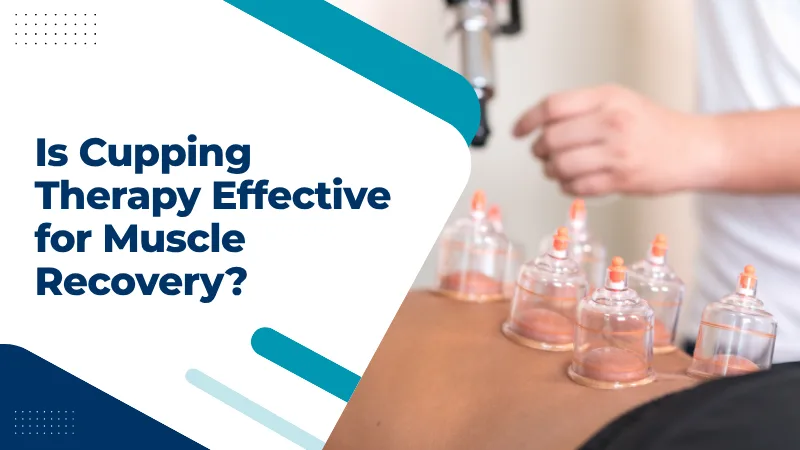

Cupping therapy does have a measurable effect on muscle recovery, though it’s not a standalone fix. It works by creating negative pressure on the skin and underlying tissue, which draws blood to the area, reduces local tension, and may help clear metabolic waste that builds up after exercise. Research on delayed onset muscle soreness shows cupping can speed up the recovery window, particularly when applied in the 24 to 48 hours after intense activity. For persistent tightness that doesn’t shift with standard massage, it’s often the technique that finally moves things along.
According to the physiotherapy team at Back to Ease in Bayswater, “Cupping works differently to hands-on massage because it decompresses tissue rather than compressing it. That makes it genuinely useful for stubborn areas that just won’t release, especially in the back, shoulders, and calves.”
How Does Cupping Therapy Work on Muscles?
Cupping isn’t complicated in principle. It uses suction cups to lift the skin and soft tissue away from the underlying structures, which is the opposite of what hands-on massage does.
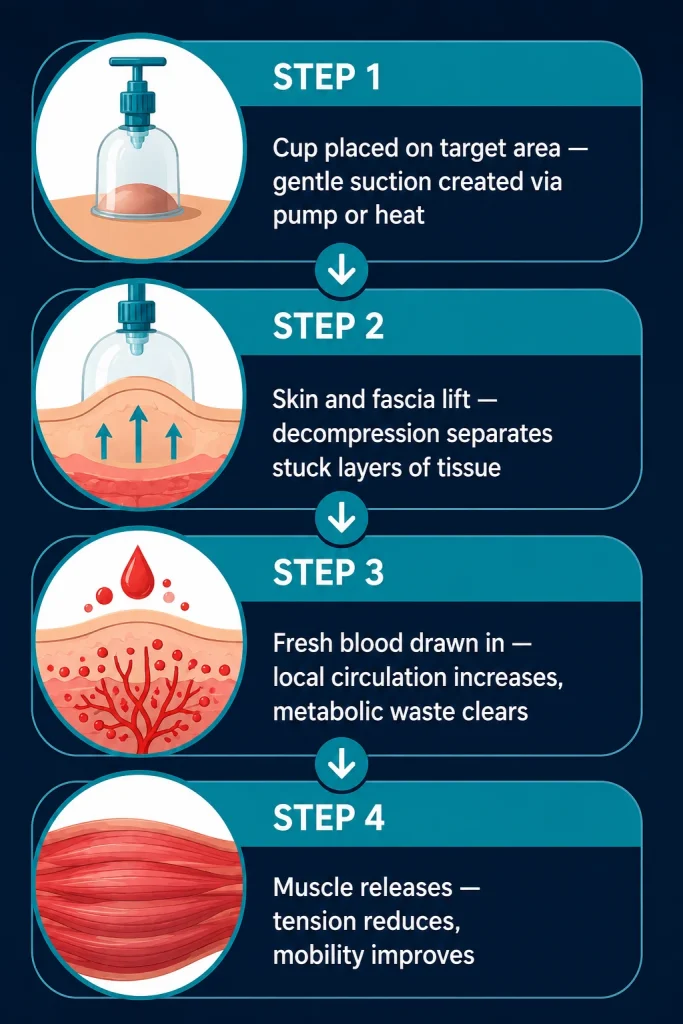
The suction doesn’t just pull at the surface. In tighter or more fibrotic areas, it creates a separation between tissue layers that haven’t been moving freely. That’s where the clinical value sits.
A 2024 systematic review in PMC found cupping consistently reduced pain scores and improved function in chronic musculoskeletal conditions, with dry cupping being the most commonly applied technique in physiotherapy settings.
The marks left behind (those familiar dark circles) reflect increased blood flow to the area, not bruising in the typical sense. They’re a sign the tissue was restricted. Gone within three to four days for most people.
Physio-guided cupping therapy is always assessed and applied as part of a broader treatment plan, not as a one-off session in isolation.
What Conditions Respond Well to Cupping?
Not every muscle complaint is a good candidate. But several presentations respond consistently and predictably.
- Delayed onset muscle soreness (DOMS): The deep, achy stiffness that peaks 24 to 48 hours after heavy exercise. Cupping applied in this window has shown delayed but meaningful improvement in muscle fatigue markers, particularly compared to no treatment at all.
- Chronic back and shoulder tension: Muscles here often carry long-held, layered tightness that doesn’t release fully with massage alone. The decompression element reaches deeper tissue in a way compression techniques can’t.
- Trigger points and myofascial restriction: Tight bands within a muscle that refer pain elsewhere. Cupping placed directly over these areas can release the knot without the intense local pressure of dry needling. Useful when needling isn’t comfortable for the patient.
- Post-sport recovery: Used before or after training to maintain tissue mobility and manage load. Not a replacement for rest. A practical adjunct for athletes carrying high training volumes.
These don’t overlap much, which is the point. It applies differently across presentations. For more on returning to activity after a muscle injury, the sports injury recovery blog covers the staged process in detail.
Why choose Back to Ease Physiotherapy?
Back to Ease is a physiotherapy clinic in Bayswater with hands-on experience treating muscle tension, sports recovery, and chronic soft tissue pain. Cupping here isn’t applied as a routine. It’s selected based on what the assessment shows, used where the clinical picture supports it, and paired with whatever else the tissue needs to actually progress.
Patients across Bayswater and Doveton with stubborn muscular tension often find this is the technique that finally shifts things. Getting the tight spot to release is one thing. Keeping it that way takes the rest of the plan.
Frequently Asked Questions
How does cupping therapy work on muscles?
Cupping uses suction to lift tissue, boost blood flow, and ease muscle tension.
Does every patient need cupping therapy?
No, a physio assesses your condition and uses it where clinically appropriate.
Are there any side effects of cupping?
Mild redness or circular marks that fade within a few days.
Can cupping replace other physiotherapy treatments?
Not always; it works best as part of a broader treatment plan.
Disclaimer :
This blog is for educational purposes only and is not a substitute for professional advice. Please consult a certified physiotherapist for diagnosis and treatment specific to your condition.