


The spine gets worked through slow, rhythmic passive movement. No thrusts, no clicks from high velocity. What that movement does is interrupt pain signals on their way to the brain, ease the muscular guarding around the painful joint, stretch the capsule that’s tightened up over time, and bring back the lumbar range that’s been lost. …

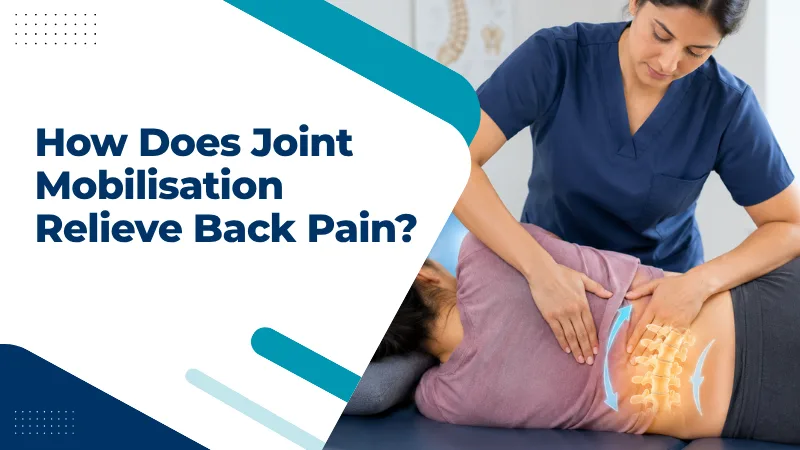
The spine gets worked through slow, rhythmic passive movement. No thrusts, no clicks from high velocity. What that movement does is interrupt pain signals on their way to the brain, ease the muscular guarding around the painful joint, stretch the capsule that’s tightened up over time, and bring back the lumbar range that’s been lost. Mobilisation doesn’t treat the symptom. It works on the joint generating it.
Back pain that doesn’t shift with rest alone often has a joint mobility component underneath.
Not every tear needs an operating room. Plenty of people with imaging showing significant rotator cuff damage live and move without symptoms at all.
According to the physiotherapy team at Back to Ease in Bayswater, “Joint mobilisation isn’t just a mechanical fix for the joint. The pain relief comes from two places: what changes structurally inside the joint, and how the nervous system reacts to steady rhythmic input. Both of those drive the outcome in lower back pain.”
How Does Joint Mobilisation Work on the Lumbar Spine?
There are different grades of mobilisation and each one targets a different stage of back pain. The technique isn’t uniform.

- Pain gating at lower grades: Grade I and II mobilisations don’t load the joint far enough to create mechanical change. What they do is generate a sensory input that competes with the pain signal going to the brain. That’s pain gating, and it’s why even gentle rhythmic movement on an acutely painful back can bring immediate relief.
- Capsule stretch at higher grades: The lumbar facet joint capsule tightens after injury or prolonged disuse. At grades III and IV, the movement goes far enough into range to put the capsule under real stretch. That’s what shifts the deep, locked-up stiffness that makes the first bend of the morning feel like the joint isn’t going to move at all.
- Deep muscle activation: Research from a 2024 PMC randomised trial found joint mobilisation improved thickness of the transversus abdominis and lumbar multifidus more than myofascial release in people with non-specific low back pain. These muscles tend to go quiet around a restricted joint, and mobilisation seems to wake them back up as the joint starts moving again.
- Improved spinal segmental movement: The lumbar vertebrae are supposed to move independently, each one contributing its share of the overall range. When one segment stops pulling its weight, the ones above and below compensate. Over time that compensation becomes its own problem.
The grade of mobilisation used reflects how the joint responds during treatment, not a fixed starting point from a protocol. For an assessment-based approach to spinal mobilisation, what’s appropriate at each lumbar level gets worked out from what the examination shows.
When Is Joint Mobilisation the Right Choice for Back Pain?
Not every back pain presentation calls for mobilisation. What’s appropriate at each level and at what grade gets worked out from the assessment.
- Non-specific lumbar stiffness: Morning stiffness that eases as you get moving, pain that builds with prolonged sitting or standing, and restricted rotation or flexion with no nerve symptoms attached. Joint mobilisation gets fairly reliable results here.
- Facet joint pain: The lumbar facet joints sit at every lumbar level and guide how the spine rotates and extends. Restricted or irritated facets make those movements sharp and limited. Working at the specific level involved is different from treating the whole lumbar region as one area.
- Sacroiliac joint dysfunction: The sacroiliac joint handles load transfer between the spine and pelvis. Pain tends to spread across the lower back and into the buttock when it’s restricted. Lumbar gapping techniques applied here aim to get that joint moving again.
- Post-surgical lumbar stiffness: Spinal surgery often leaves neighbouring levels stiffer as they absorb the redistributed load. Mobilisation at those levels is about maintaining movement and reducing the long-term overload that builds when one level stops contributing.
For more on how lumbar disc involvement affects symptoms and assessment, read our blog on bulging disc signs, including how nerve root involvement changes the clinical picture.
What Lumbar Mobilisation Exercises Can Support the Process?
The work done in a session doesn’t stay put by itself. Movement between sessions is what stops the joint going back to where it started.

- Lumbar rotation stretch: On the back with knees bent, letting them drop side to side slowly. This one keeps the rotation that mobilisation opens up from closing back down before the next session.
- Cat-cow mobilisation: On hands and knees, moving between lumbar flexion and extension in a slow rhythm. Gets through the full lumbar range without compressing the disc, which is what makes it one of the most commonly used spine mobilisation exercises in rehab.
- Seated lumbar flexion: A controlled forward lean from sitting. This position creates a gapping effect at L4-L5 and L5-S1, the two levels that tend to restrict most often in lower back pain.
- Knee-to-chest stretch: Flat on the back, one or both knees drawn toward the chest. Takes compressive load off the lumbar joints. No equipment needed, which makes it a practical option for decompressing the lower lumbar area between sessions.
Home exercises and clinical sessions work better together than either does alone. Our blog on lower back pain physio explains how that combination plays out across a typical treatment course.
Key Takeaways: Joint mobilisation targets the restricted segment, not the symptom. Graded movement at the right level reduces pain through the nervous system and restores range by stretching the capsule and reactivating the deep stabilisers. Most non-specific lumbar pain with a stiffness pattern responds to this approach. The home exercise component is what makes the change last past the session itself.
Frequently Asked Questions
What is joint mobilisation used for in back pain?
Stiff, restricted spinal joints that aren’t moving properly and causing pain.
Is spinal mobilisation safe for everyone?
Not for everyone. Fracture, osteoporosis or instability changes what’s appropriate.
How many sessions does joint mobilisation take for back pain?
Two to four sessions often shows a change. Some cases take longer.
Can I do lumbar mobilisation exercises at home?
Yes, certain movements help. Start with what a physio has shown you.
Disclaimer :
This blog is for educational and informational purposes only and should not be considered professional advice.
Book a Consultation
It’s easy and free!