
Whether you've pulled something at footy training, tweaked your back lifting at work, or felt that dreaded twinge mid-run - muscle strains are one of the most common injuries we see at Back to Ease Physiotherapy, providing physiotherapy in Bayswater, Doveton, and the wider south-eastern Melbourne suburbs.So, how long do strained muscles take to heal? …

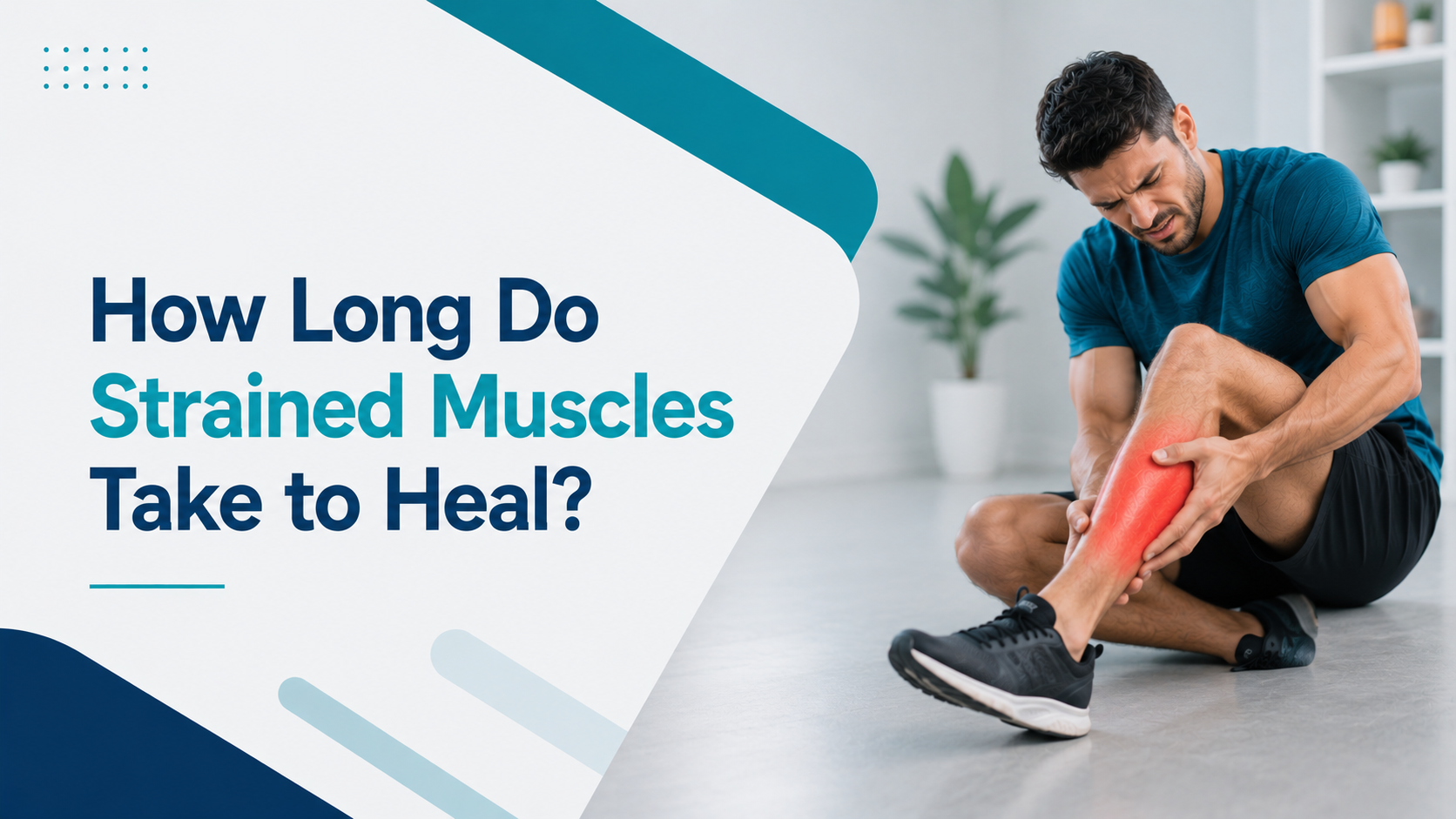
Whether you’ve pulled something at footy training, tweaked your back lifting at work, or felt that dreaded twinge mid-run – muscle strains are one of the most common injuries we see at Back to Ease Physiotherapy, providing physiotherapy in Bayswater, Doveton, and the wider south-eastern Melbourne suburbs.
So, how long do strained muscles take to heal? The honest answer is: it depends on the grade of injury, the muscle involved, and – most importantly – how well it’s managed from day one.
Saurabh Patel (Sam), our principal physiotherapist with a postgraduate specialisation in Advanced Clinical Musculoskeletal and Sports Physiotherapy, shares what you actually need to know about muscle strain recovery – from the biology of healing to what a proper rehab plan looks like.
What Is a Muscle Strain, Really?
A muscle strain – often called a “pulled muscle” – occurs when muscle fibres are overstretched or partially torn. It’s not just post-workout soreness. A true strain involves structural damage to the tissue, which is why recovery takes more than a day’s rest.
The most commonly strained muscles include:
- Hamstrings (back of the thigh)
- Calf muscles
- Lower back (lumbar)
- Groin (adductors)
- Quadriceps (front of the thigh)
We regularly treat these injuries across our Sports Injuries & Rehab Programs at both our Bayswater and Doveton clinics – in weekend warriors, tradies, and everyday active people alike.
The Three Grades of Muscle Strain - and Why They Matter
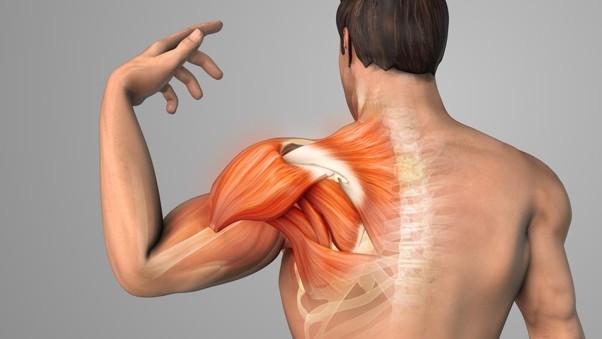
Not all strains are the same. Physiotherapists classify them into three grades, and your grade is the single biggest factor in determining your recovery timeline.
Grade 1 – Mild Strain
A small number of fibres are overstretched or microscopically torn. You’ll feel tenderness and tightness but can still move the muscle.
Typical healing time: 1 – 3 weeks
Grade 2 – Moderate Strain
A partial tear involving a significant portion of the muscle fibres. Expect noticeable pain, swelling, and weakness – you may struggle to bear weight or complete normal movements.
Typical healing time: 3 – 8 weeks
Grade 3 – Severe Strain (Complete Tear)
A full rupture of the muscle or its tendon attachment. This is the most serious grade and may require a surgical opinion.
Typical healing time: 3 – 6 months or longer
“A lot of patients come in expecting a Grade 1 to resolve in a few days, and when it doesn’t, they push through – which often turns a minor strain into something much more significant. Understanding your grade early is the most important step in protecting your recovery.”
– Saurabh Patel (Sam), Principal Physiotherapist, Back to Ease Physiotherapy
What Affects How Quickly a Strained Muscle Heals?
Recovery isn’t one-size-fits-all. Several factors influence how fast your body repairs damaged muscle tissue:
- The grade of the strain
- Which muscle is involved – muscles with poor blood supply generally heal more slowly
- Your age – tissue repair naturally slows over time
- Overall fitness level and nutrition
- Whether treatment was sought early
- Whether you returned to activity too soon (re-strain is extremely common)
The good news is that some of these factors are very much within our control. At Back to Ease Physiotherapy, guiding patients back to activity at the right pace – not too early, not so late that deconditioning sets in – is a core part of what we do in our Musculoskeletal Injury programs.
What's Actually Happening Inside a Healing Muscle?
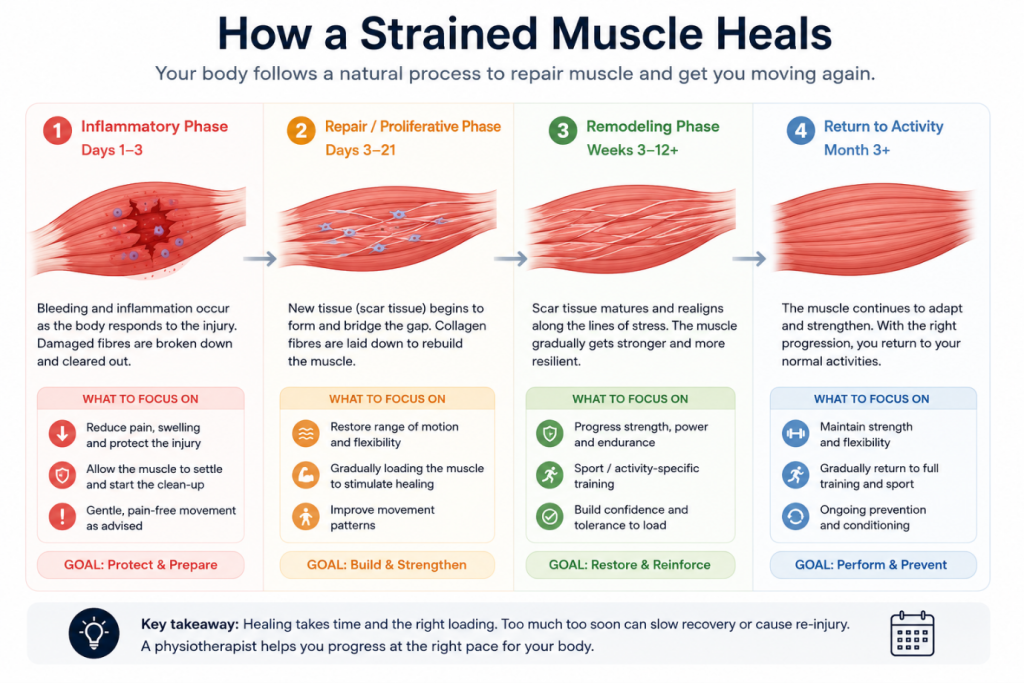
Phase 1: Inflammatory (Days 1–3)
The injured muscle bleeds, triggering inflammation as the body begins clearing away damaged tissue. This is why the area becomes painful, swollen, and tender. This early response is essential for healing—protecting the injury while allowing gentle, pain-free movement helps prepare the muscle for recovery.
Phase 2: Repair / Proliferative (Days 3–21)
New collagen and scar tissue begin bridging the damaged muscle fibres. Gradual, guided loading and restoring movement encourage stronger, better-organised tissue, improving flexibility and reducing the risk of excessive scar formation.
Phase 3: Remodelling (Weeks 3–12+)
The scar tissue matures and realigns along the direction of muscle forces. Progressive strengthening, endurance training, and functional exercises help the muscle become more resilient. Returning to higher-level activities too quickly during this stage increases the risk of re-injury.
Return to Activity (Month 3+)
The muscle continues adapting and strengthening beyond the initial healing period. Maintaining strength, flexibility, and sport-specific conditioning allows a safe return to normal activities while helping prevent future injuries.
How Physiotherapy Helps You Recover from a Muscle Strain
Rest is the starting point – not the treatment plan. Here’s what evidence-based physiotherapy actually does at each stage of recovery:
Early Stage (Weeks 1–2)
- PEACE & LOVE protocol
- Manual therapy to reduce muscle spasm and improve circulation
- Gentle range-of-motion exercises to maintain movement without worsening the injury
Mid Stage (Weeks 2–6)
- Progressive loading – carefully graded exercises that rebuild strength without re-tearing
- Dry needling or soft tissue massage to address tightness and trigger points
- Movement retraining specific to your sport or daily demands
Late Stage / Return to Activity (Weeks 6+)
- Functional rehabilitation drills that replicate your actual activity demands
- Strength benchmarking to confirm the muscle is genuinely ready
- Injury prevention strategies so this doesn’t keep happening
Saurabh Patel (Sam) integrates hands-on manual therapy with personalised exercise prescription across both our Bayswater and Doveton clinics, building each plan around where you are in your recovery – not a generic timeline.
Ready to stop guessing and start actually healing?
Book a one-on-one assessment with Saurabh and walk away with a clear picture of your strain grade, your realistic recovery window, and a step-by-step plan to get back to full strength – all in a single session.
When Should You See a Physio for a Muscle Strain?
While many muscle strains settle with time, these signs suggest it’s time for an assessment:
- Pain that prevents normal walking, bending, or gripping
- Visible bruising or swelling that worsens after 48 hours
- A “pop” or “snap” felt at the moment of injury
- No improvement after 5–7 days
- Recurrent injuries affecting the same muscle
Delaying assessment – particularly for Grade 2 and 3 strains – can add weeks to your recovery. Early physiotherapy input makes a measurable difference to both the speed and completeness of healing.
If you’re based in Bayswater, Doveton, or the surrounding suburbs including Knox, Ferntree Gully, Dandenong, or Wantirna – no GP referral is needed. You can book directly.
Ready to stop guessing and start actually healing?
Don’t wait until it’s bad enough that you can’t ignore it. Early intervention is almost always quicker, cheaper, and more effective than managing a worsened injury weeks down the track.
The Bottom Line on Muscle Strain Recovery
How long do strained muscles take to heal? Anywhere from one to three weeks for a mild Grade 1 pull, to six months or beyond for a complete rupture. The grade of injury, the muscle involved, your overall health, and the quality of your rehab all play a role.
What we can say with confidence: a well-managed muscle strain, supported by the right physiotherapy at the right time, heals faster, heals more completely, and is far less likely to come back.
If you’re not sure where your injury sits, or your recovery has stalled, we’d encourage you to come in for a proper assessment. Whether you’re chasing a return-to-sport date or just want to get through your workday pain-free, we’re here to help you get there.
Pop in, give us a ring, or book online – our team at Back to Ease Physiotherapy in Bayswater and Doveton is ready when you are.
Frequently Asked Questions
Can I still exercise with a strained muscle?
It depends on the grade. For a Grade 1, gentle movement is usually fine and often beneficial. For Grade 2 and 3 strains, we’d strongly recommend getting assessed before continuing – the wrong movement can significantly worsen the injury.
Is heat or ice better for a muscle strain?
In the first 48–72 hours, ice is generally preferred – 20 minutes on, at least 40 minutes off. Once the acute swelling settles, gentle heat can help relax the muscle and improve blood flow. Your physio will guide you based on your specific stage of recovery.
How do I know if I've torn a muscle or just strained it?
A strain is technically a tear – the difference is degree. Signs that suggest something more serious include a visible deformity, a “pop” at the time of injury, severe bruising spreading over 24-48 hours, or a complete loss of strength in that area. A clinical assessment is the most reliable way to know for certain.
Can physio actually make a strain heal faster?
Yes – and there’s good evidence to support this. Structured, progressive loading guided by a physiotherapist consistently produces better and faster outcomes than passive rest alone. The key is getting the right exercises at the right time in the healing process.
Do I need a GP referral to see a physio in Australia?
No. You can book directly with a physiotherapist in Australia without any referral. If you’re using a Medicare Chronic Disease Management plan or a WorkSafe/TAC claim, you’ll need the relevant documentation – but for a standard private appointment, just book online or give us a call.
References
- Järvinen TAH et al. (2005). Muscle injuries: biology and treatment. The American Journal of Sports Medicine, 33(5), 745–764.
- Orchard JW (2012). Hamstrings are most susceptible to injury during the early stance phase of sprinting. British Journal of Sports Medicine, 46(2), 88–89.
- Bleakley CM et al. (2012). PRICE needs updating, should we call the POLICE? British Journal of Sports Medicine, 46(4), 220–221.
- Maffulli N et al. (2011). Muscle injuries: a brief guide to classification and management. Translational Medicine @ UniSa, 2, 14–18.
- van der Made AD et al. (2019). Physiotherapy in acute hamstring injuries: a systematic review. Scandinavian Journal of Medicine & Science in Sports.
Disclaimer: The information shared in this content is for educational purposes only and not for promotional use. Always seek advice from a qualified healthcare professional regarding any medical condition or injury.
Book a Consultation
It’s easy and free!